
Content: # Nine Ways AI Helps Founder-Led Sales Teams Punch Above Their Weight
For early-stage startups, founder-led sales is a necessity. Founders possess product knowledge, passion, and authority to close early deals and find product-market fit. However, founders are time-poor, juggling product development, fundraising, and team building alongside sales.
This lack of time often leads to inconsistent prospecting, dropped follow-ups, and a chaotic CRM—bottlenecks that stifle growth just when it needs to accelerate. The challenge is scaling the founder's unique sales ability without requiring 100-hour weeks.
This article outlines nine ways AI can act as a force multiplier for founder-led sales teams. We'll explore how founders can use AI to automate administrative burden, scale personalized outreach, and compete with larger organizations.
What We'll Cover
In this article, we will cover:
- The unique challenges of founder-led sales motions
- How AI acts as a virtual SDR and RevOps team
- 9 actionable AI workflows for busy founders
- Transitioning from founder-led to a scalable sales team
Understanding the Approach
In founder-led sales, AI serves as an operational exoskeleton. It automates top-of-funnel and post-call administrative tasks so founders can focus on high-leverage activities: discovery, relationship building, and closing.
Example: A founder spends 2 hours nightly researching prospects and drafting personalized emails. With an AI agent, the system researches accounts, identifies triggers (like a funding round), and drafts emails in the founder's voice. The founder spends 15 minutes reviewing drafts and reclaims hours.
Why This Matters
AI helps founders maintain sales momentum without burnout.
- Before: Outbound is inconsistent due to competing priorities. After: AI automates sequences for steady pipeline.
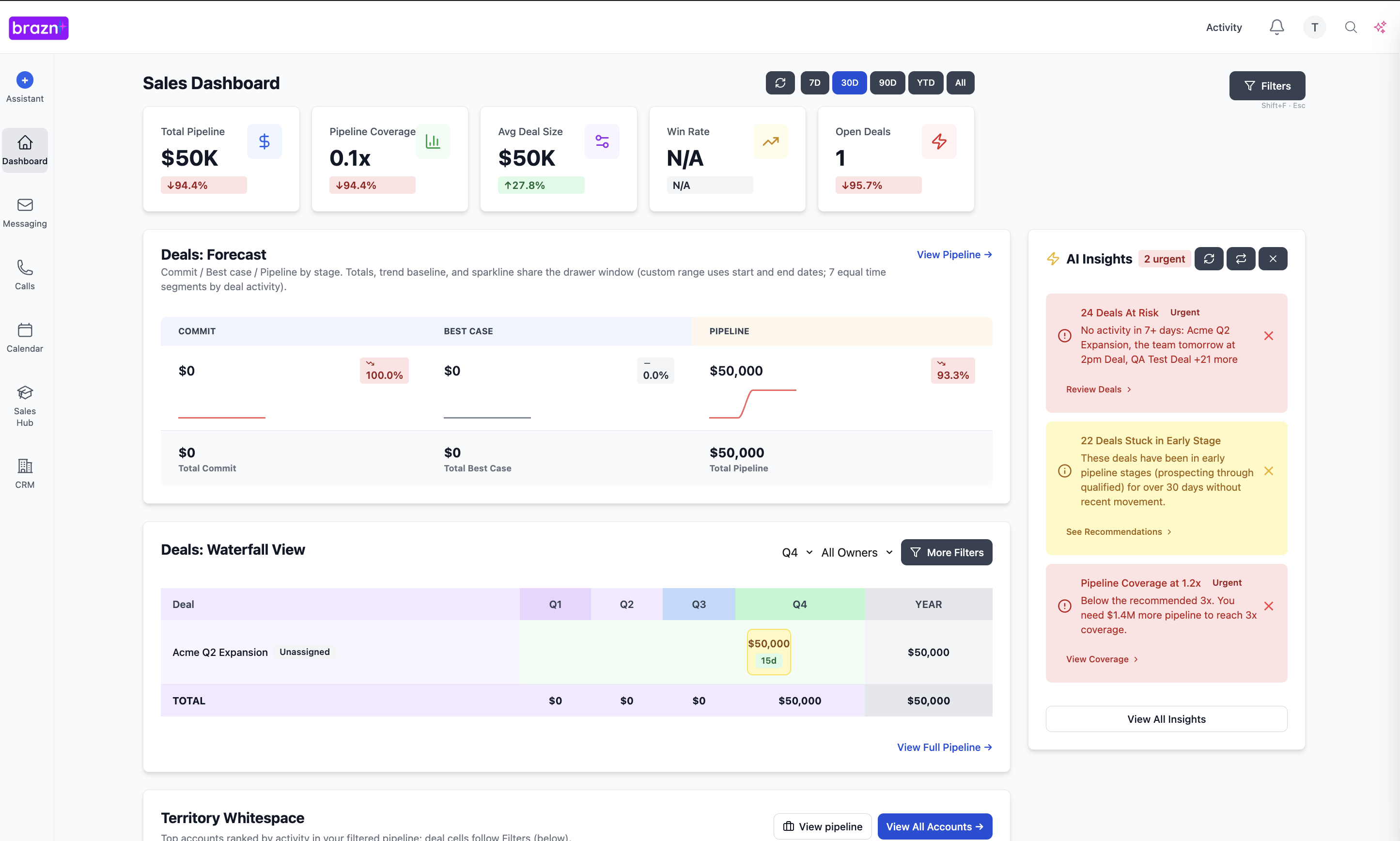
- Before: CRM hygiene is poor and hard to hand off. After: AI logs calls, updates stages, and captures MEDDPICC.
- Before: Deal management relies on memory and intuition. After: AI provides objective summaries and next-step recommendations.
The Complete Guide
1. The Automated SDR
Objective: Maintain consistent outbound volume.
Advice: Use AI agents to build lists, research accounts, and draft personalized sequences.
2. Pre-Call Intelligence Briefs
Objective: Prepare for meetings in minutes.
Advice: Have AI summarize prospect news, LinkedIn activity, and company context before calls.
3. The Ghostwriter for Follow-Ups
Objective: Never drop the ball after a demo.
Advice: Use AI to draft follow-up emails from call transcripts.
4. CRM Auto-Pilot
Objective: Keep pipeline accurate without manual entry.
Advice: Use conversation intelligence to update CRM fields based on calls.
5. Objection Handling Sounding Board
Objective: Refine your pitch.
Advice: Use AI to identify recurring objections and suggest rebuttals.
6. The Virtual Deal Desk
Objective: Navigate negotiations and pricing.
Advice: Use AI to analyze similar past deals and recommend pricing/discounts.
7. Content Repurposing Engine
Objective: Generate content and inbound.
Advice: Use AI to turn calls and demos into posts, articles, and newsletters.
8. Automated Meeting Scheduling
Objective: Reduce scheduling friction.
Advice: Use scheduling assistants to prioritize urgent meetings.
9. The Transition to Sales Team Playbook
Objective: Document the sales motion for hires.
Advice: Use AI to analyze winning calls and generate onboarding materials.
How to Implement This
Start simple: a core CRM plus robust conversation intelligence/automation. Build a system that works now and becomes the foundation for first sales hires.
Next Steps
Pick one administrative task (follow-ups or CRM updates) and automate it this week.
Nine Ways AI Helps Founder-Led Sales Teams Punch Above Their Weight
For early-stage startups, founder-led sales is a necessity. Founders possess the deep product knowledge, the passion, and the authority to close early deals and find product-market fit. However, founders are also notoriously time-poor, juggling product development, fundraising, and team building alongside their sales efforts.
This lack of time often leads to inconsistent prospecting, dropped follow-ups, and a chaotic CRM—bottlenecks that stifle growth just when it needs to accelerate. The challenge is scaling the founder's unique sales ability without requiring them to work 100-hour weeks.
This article outlines nine specific ways AI can act as a force multiplier for founder-led sales teams. We'll explore how founders can use AI to automate the administrative burden, scale their personalized outreach, and compete with much larger, better-resourced sales organizations.
What We'll Cover
In this article, we will cover:
- The unique challenges of founder-led sales motions
- How AI acts as a virtual SDR and RevOps team
- 9 actionable AI workflows for busy founders
- Transitioning from founder-led to a scalable sales team
Understanding the Approach
In a founder-led sales context, AI serves as an operational exoskeleton. It automates the top-of-funnel and post-call administrative tasks, allowing the founder to focus entirely on high-leverage activities: discovery, relationship building, and closing.
Example: A founder spends 2 hours every evening researching prospects and drafting highly personalized cold emails. By implementing an AI agent, the system automatically researches target accounts, identifies relevant triggers (like a recent funding round), and drafts the emails in the founder's unique voice. The founder now spends 15 minutes reviewing and approving the drafts, reclaiming hours of their day.
Why This Matters
Leveraging AI is critical for founders to maintain sales momentum without burning out or neglecting other critical areas of the business.
- Before: Founders struggle to maintain consistent outbound activity due to competing priorities. After: AI automates outbound sequences, ensuring a steady flow of new pipeline regardless of the founder's schedule.
- Before: CRM hygiene is poor, making it difficult to track deal progress or hand off accounts to future sales hires. After: AI automatically logs calls, updates deal stages, and captures MEDDPICC data, creating a clean system of record.
- Before: Founders rely entirely on their own intuition and memory to manage deals. After: AI provides objective insights, summaries, and next-step recommendations, acting as a strategic sounding board.
The Complete Guide
1. The Automated SDR
Objective: Maintain consistent outbound volume.
Actionable Advice: Use AI agents to build lists, research accounts, and draft personalized sequences.
2. Pre-Call Intelligence Briefs
Objective: Prepare for meetings in minutes, not hours.
Actionable Advice: Have AI summarize the prospect's recent news, Linkedin activity, and company financials 15 minutes before the call.
3. The "Ghostwriter" for Follow-Ups
Objective: Never drop the ball after a great demo.
Actionable Advice: Use AI to automatically draft follow-up emails based on the call transcript, summarizing action items and proposing next steps.
4. CRM Auto-Pilot
Objective: Keep the pipeline accurate without manual data entry.
Actionable Advice: Implement conversation intelligence that automatically updates CRM fields (like budget or timeline) based on what was discussed on the call.
5. Objection Handling Sounding Board
Objective: Refine your pitch and overcome resistance.
Actionable Advice: Feed AI your call transcripts and ask it to identify recurring objections and suggest stronger rebuttals.
6. The Virtual Deal Desk
Objective: Navigate complex negotiations and pricing discussions.
Actionable Advice: Use AI to analyze similar past deals and recommend optimal pricing structures or discount levels.
7. Content Repurposing Engine
Objective: Build a personal brand and generate inbound leads.
Actionable Advice: Use AI to turn your sales call recordings or product demos into LinkedIn posts, blog articles, and newsletters.
8. Automated Meeting Scheduling
Objective: Eliminate the back-and-forth of finding a time to connect.
Actionable Advice: Use AI scheduling assistants that can read intent and urgency to prioritize important meetings.
9. The "Transition to Sales Team" Playbook
Objective: Document your successful sales motion for future hires.
Actionable Advice: Use AI to analyze your winning calls and automatically generate onboarding materials, battlecards, and talk tracks for your first dedicated sales hires.
How to Implement This
For founders, operationalizing these AI tools should be about simplicity and speed to value. Don't overcomplicate the tech stack. Start with a core CRM and a robust conversation intelligence/AI automation platform. The goal is to build a system that works for you now, and that will eventually serve as the foundation for your first dedicated sales hires.
Next Steps
Founders don't need to choose between building the product and selling it. By deploying AI as a strategic multiplier, you can execute a highly effective sales motion while preserving your time and energy for the rest of the business.
Pick one administrative task that drains your energy—like writing follow-up emails or updating the CRM—and automate it with AI this week. Ready to scale your founder-led sales engine? See how Brazn's platform can act as your virtual revenue team.
---
Book a demo to see how Brazn AI fits into your sales stack.

About the Author
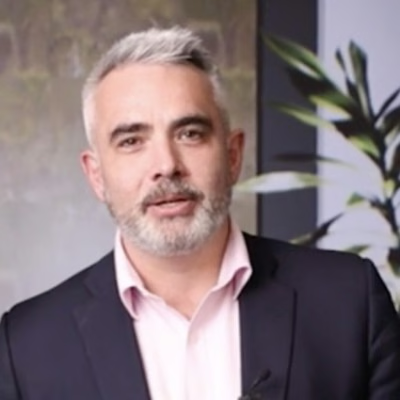
Alex Margarit, Sales AI Expert, SaaS Sales Leader, BMC, ServiceNow, Docusign — 25+ years in SaaS sales.