How to Use AI for Sales Automation
Sales automation has existed for years — sequences, workflows, lead routing, task management. What AI adds is a qualitatively different capability: not just automating tasks, but automating intelligence. The difference between rule-based automation (do X when Y happens) and AI automation (analyse what happened and determine the best action) is the difference between a playbook that runs itself and a playbook that thinks.
Used well, AI sales automation dramatically reduces the administrative burden on sales reps, improves the quality of CRM data, surfaces insights that would take hours to derive manually, and creates a feedback loop between what happens in customer conversations and how deals are managed. Used poorly — as a mass personalisation tool for cold outreach — it produces the same generic content at higher volume and damages both sender reputation and prospect trust.
The Six AI Automation Use Cases in Sales
Use case 1: Call intelligence and post-call automationThe highest-value AI automation in most SaaS sales teams. Every customer-facing call is recorded, transcribed, and analysed. AI extracts:
Structured call summary (key topics, decisions, action items)
MEDDPICC elements established or updatedBuyer sentiment and engagement signals
Objections raised and responses given
Next steps agreed
All of this is written to the CRM automatically. The rep's post-call workflow shrinks from 30 minutes to 90 seconds.
What makes this automation high-value: It captures intelligence that was previously either lost (undocumented conversations) or distorted (rep-written summaries that reflect what the rep remembers rather than what was actually said). AI extraction from transcript is complete and unbiased. Use case 2: Account and contact research automationFor every new prospect in the pipeline, AI aggregates: company overview, funding status, technology stack, recent news, job postings, contact profile, and Linkedin activity. The research that would take 30–40 minutes of manual work is delivered in a structured brief in under 2 minutes.
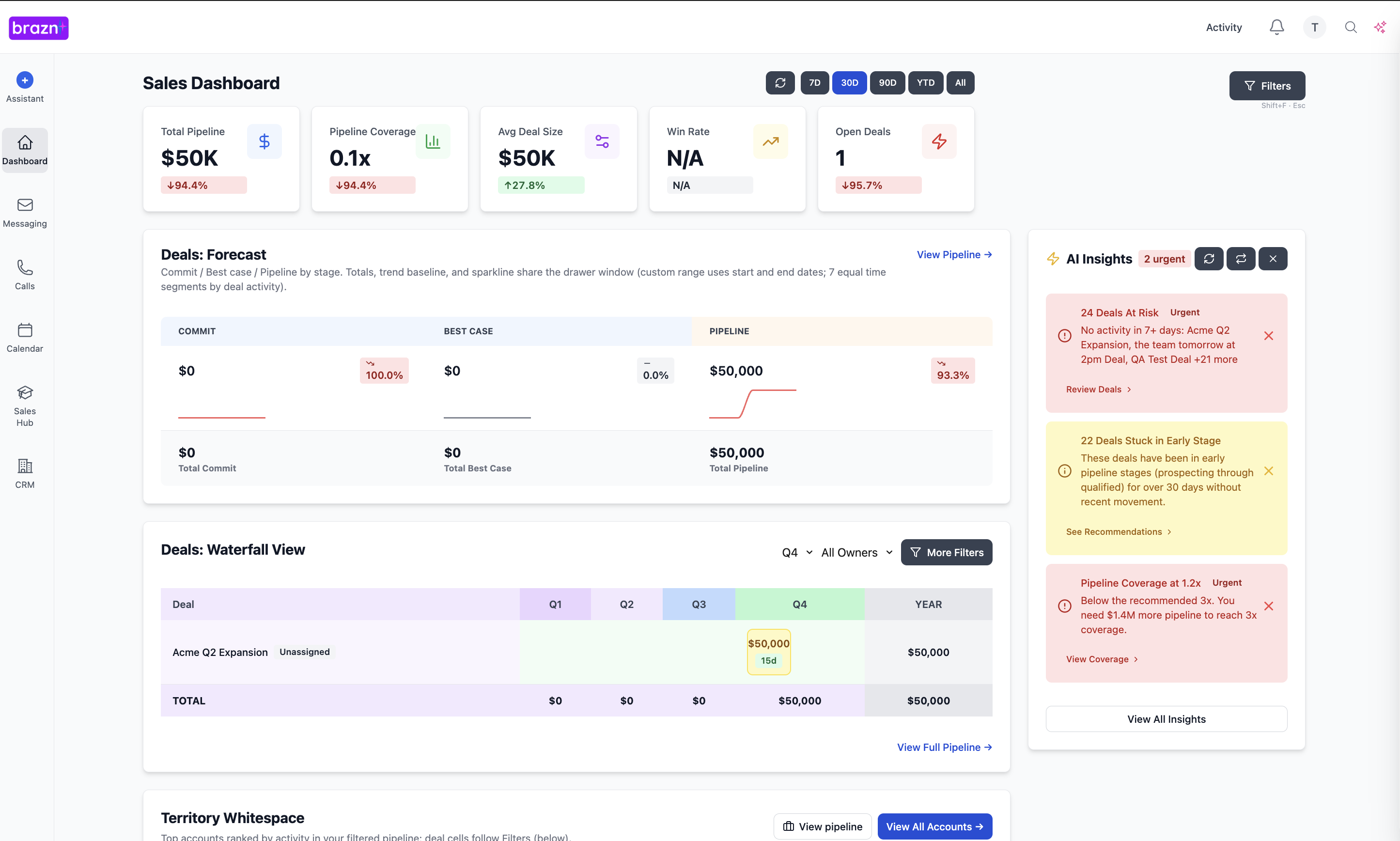
What makes this automation high-value: It enables genuine personalisation at scale — every rep can prepare thoroughly for every call without research being the bottleneck. Outreach is more specific, discovery is better informed, and demos are more personalised. Use case 3: Deal health and risk monitoringAI monitors every active deal for qualification completeness, engagement velocity, stage duration anomalies, and champion activity signals. Deals that are at risk of slipping are flagged before they slip — when intervention is still possible.
What makes this automation high-value: Pipeline risk identification that was previously dependent on manager experience and intuition becomes systematic and continuous. Every deal in the pipeline is assessed against the same criteria every day — not just the deals the manager happens to ask about in the pipeline review. Use case 4: Personalised outreach draftingAI generates personalised outreach drafts — cold emails, follow-up messages, re-engagement sequences — based on the prospect's profile, the identified trigger event, and the rep's previous interactions with the account. The rep reviews and sends rather than writing from scratch.
What AI does here: First-draft generation that incorporates the relevant personalisation elements — company news, role context, ICP pain hypothesis — into a message that the rep edits rather than creates. What AI doesn't do here: Replace the rep's judgment about tone, relationship context, and whether to send. The rep owns the relationship. AI supports the research and drafting. Use case 5: Pipeline data enrichmentAI continuously enriches contact and account records — updating company data, adding missing fields, flagging data quality issues. The CRM reflects current reality rather than the state of the account when it was created.
What makes this automation high-value: Sales reps make outreach decisions based on CRM data. Stale or incomplete data produces misaligned outreach. Continuously enriched data produces relevant, timely engagement. Use case 6: Forecasting intelligenceAI generates deal-level probability scores and weighted pipeline forecasts based on MEDDPICC completeness, engagement signals, and historical close rate patterns — not conventional probability percentages. The AI-weighted forecast is compared to the rep-submitted forecast; divergences surface the deals that need management attention.
What makes this automation high-value: Forecast accuracy improvement reduces the business planning errors that come from systematic over-optimism — over-hiring on inflated forecasts, under-investing on conservative ones.What AI Sales Automation Is Not
AI is not a replacement for the selling relationship. The customer calls, the discovery conversations, the champion relationships, the negotiation — these remain human activities. AI supports the human in all of them; it doesn't substitute for them. AI is not a mass personalisation engine for cold outreach at scale. AI-generated cold email sequences sent to 10,000 prospects at volume produce lower reply rates than thoughtfully personalised outreach to 100 correctly selected prospects. The volume advantage of AI-assisted outreach is meaningful; the "personalise everything at infinite scale" claim is not. AI is not a decision-maker. AI surfaces signals, generates recommendations, and provides analysis. The rep decides how to respond to a customer. The manager decides which deals to prioritise. The AI provides the input; the human provides the judgment.Implementation Sequence
Month 1: Call intelligence and post-call automation. Highest immediate value, clearest ROI, most straightforward adoption. Connect call recording + Brazn + CRM. Reps experience time savings immediately. Month 2: Account research automation. Connect Brazn's pre-call brief to the sales workflow. Reps stop doing manual research before calls and start reviewing AI-generated briefs. Month 3: Deal health monitoring and forecasting intelligence. Configure MEDDPICC fields in CRM, connect Brazn's deal health scoring, build manager dashboard. Pipeline reviews shift from narrative to evidence-based. Month 4+: Outreach drafting and pipeline enrichment. Introduce AI-assisted outreach drafting as a supplement to rep-written outreach — not a replacement. Begin using enrichment data to prioritise prospect lists.How Brazn Delivers AI Sales Automation
Brazn is the AI sales automation platform built specifically for qualification-first SaaS sales teams — integrating call intelligence, account research, deal health monitoring, and CRM automation into a single platform that connects to Salesforce, Hubspot, and the tools the team already uses. The automation is designed to return time to reps for selling, not to add a new layer of tools to manage.
---
####
Book a demo to see how Brazn AI fits into your sales stack.

About the Author
Alex Margarit, Sales AI Expert, SaaS Sales Leader, BMC, ServiceNow, Docusign — 25+ years in SaaS sales.