
Content: # Five Plays to Triple Outbound Output Without Tripling Headcount
In the past, the standard playbook for scaling outbound sales was simple: hire more SDRs. If you wanted to double your pipeline, you doubled your headcount. But in today's economic climate, that brute-force approach is no longer viable. Revenue leaders are under intense pressure to do more with less, driving growth without inflating their budgets.
The good news is that most outbound engines are highly inefficient. Reps spend hours on manual research, data entry, and writing generic emails, leaving little time for actual selling. By optimizing these processes, you can dramatically increase output.
This article provides a playbook for scaling your outbound efforts efficiently. We will outline five specific strategies to leverage automation, AI, and better data to triple your team's output without adding a single new hire.
What We'll Cover
In this article, we will cover:
- Why the 'hire more SDRs' model is broken
- The hidden inefficiencies in traditional outbound
- 5 plays to maximize rep productivity
- How to leverage AI for personalization at scale
- Implementing a multi-channel outbound strategy
Understanding the Approach
Scaling output without headcount requires a shift from manual effort to systemic leverage. It means using technology to automate the repetitive tasks that consume a rep's day, allowing them to focus exclusively on high-value activities like relationship building and objection handling.
Example: Instead of an SDR spending 20 minutes researching a prospect's LinkedIn profile and company news to write a custom email, an AI tool automatically scrapes that data and generates a highly personalized draft in seconds. The SDR simply reviews, tweaks, and sends, reducing the time per email from 20 minutes to 2 minutes, effectively a 10x increase in output for that specific task.
Why This Matters
Implementing these plays allows you to scale your pipeline generation efficiently, improving unit economics and reducing rep burnout.
- Before: SDRs spend 60% of their time on non-selling activities like research and data entry. After: Automation handles the admin work, allowing SDRs to spend 90% of their time engaging with prospects.
- Before: Reps send low-quality, generic emails to hit their daily activity targets. After: AI enables high-volume, hyper-personalized outreach, significantly increasing reply rates.
- Before: The company struggles to maintain a consistent outbound motion due to high SDR turnover. After: A systematized, automated process ensures consistent output regardless of individual rep performance.
The Complete Guide
Play 1: Automate Account Research with AI
Objective: Eliminate the time reps spend gathering basic information.
Actionable Advice: Implement an AI tool that automatically synthesizes a target account's recent news, 10-K filings, and executive changes into a concise brief, delivered directly to the rep's CRM or Slack.
Best Practices: Train reps to use these briefs to quickly identify a relevant 'hook' for their outreach, rather than reading the entire document.
Play 2: Deploy Dynamic Email Templates
Objective: Personalize outreach at scale without manual writing.
Actionable Advice: Use sales engagement platforms to create templates with dynamic variables that change based on the prospect's industry, role, or recent company events (e.g., a new funding round).
Best Practices: Ensure your CRM data is clean and accurate, as dynamic templates rely heavily on this data to function correctly.
Play 3: Implement Multi-Channel Sequencing
Objective: Increase the likelihood of connection by reaching prospects where they are.
Actionable Advice: Don't rely solely on email. Build automated sequences that incorporate phone calls, LinkedIn connections, and direct mail (for high-value accounts) in a coordinated cadence.
Best Practices: Ensure the messaging is consistent across all channels. If you mention a specific pain point in an email, reference it in the follow-up voicemail.
Play 4: Utilize Intent Data for Prioritization
Objective: Focus your reps' effort on the accounts most likely to buy.
Actionable Advice: Integrate intent data (like G2 or 6sense) into your CRM. Create automated workflows that route 'hot' accounts (those actively researching your solution) to the top of your reps' call lists.
Best Practices: Trigger specific, relevant messaging based on the intent signal. If they're looking at a competitor, send a comparison guide.
Play 5: Centralize and Automate Data Entry
Objective: Keep reps selling, not typing.
Actionable Advice: Use conversation intelligence tools to automatically transcribe calls and update CRM fields (like MEDDPICC criteria) based on the conversation, eliminating manual data entry.
Best Practices: Require reps to review the AI-generated notes for accuracy, but position the tool as a time-saver, not a surveillance mechanism.
How to Implement This
RevOps is the engine behind these plays, responsible for integrating the various tools (intent data, AI writers, sales engagement platforms) into a seamless workflow. Enablement must train the team on how to use these new tools effectively, emphasizing that automation is meant to augment their skills, not replace them. Sales leadership must shift their focus from tracking raw activity volume to measuring the quality and conversion rates of the automated outreach.
Next Steps
You don't need more reps; you need more leverage. By implementing these five plays, you can transform your outbound motion from a manual grind into a highly efficient, automated machine.
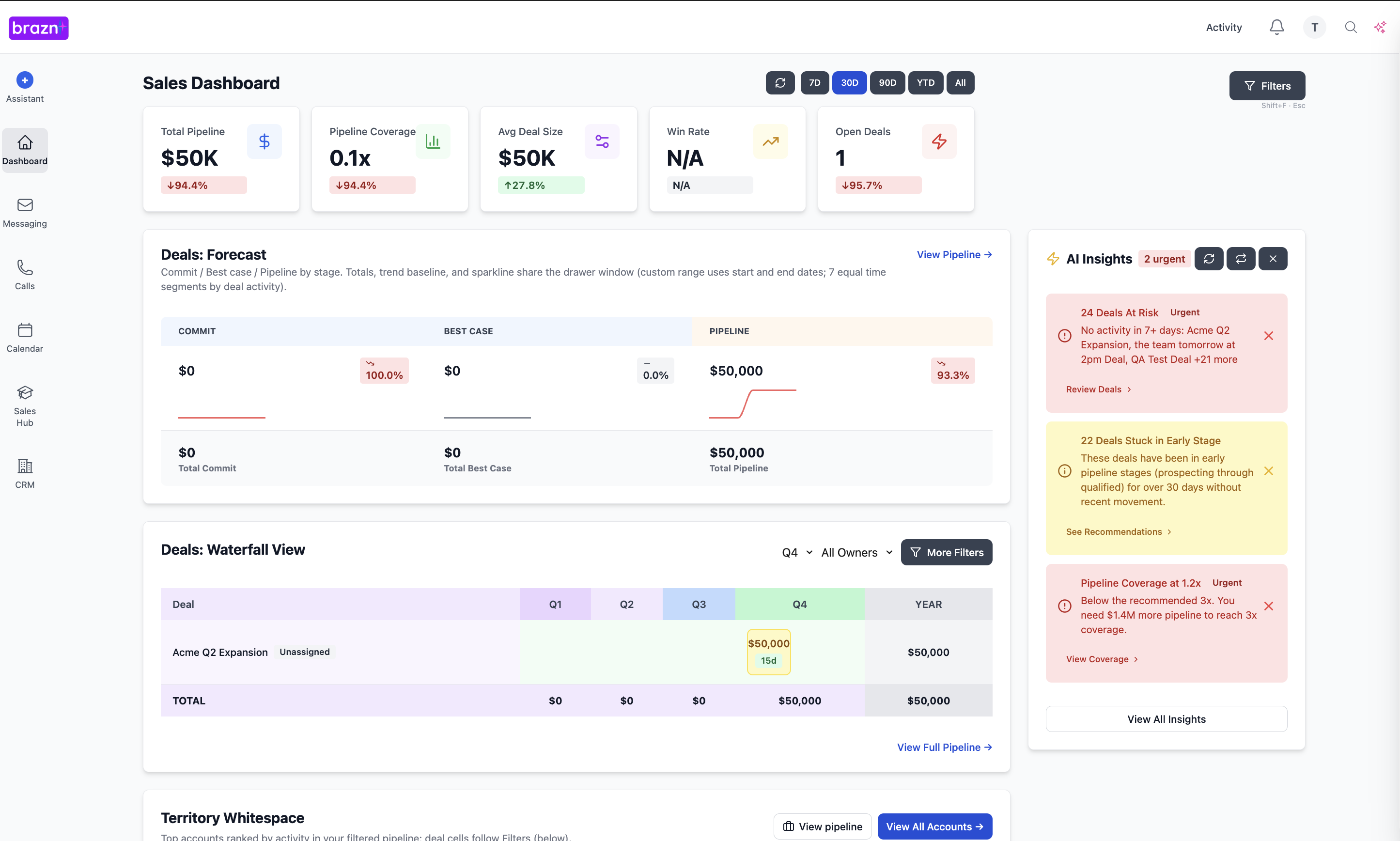
Start with the easiest win: automating account research. Give your reps an AI tool that summarizes company news, and watch their productivity soar. Ready to scale your outbound efforts? Discover how Brazn's platform provides the automation and intelligence you need to triple your output.
Five Plays to Triple Outbound Output Without Tripling Headcount
In the past, the standard playbook for scaling outbound sales was simple: hire more SDRs. If you wanted to double your pipeline, you doubled your headcount. But in today's economic climate, that brute-force approach is no longer viable. Revenue leaders are under intense pressure to do more with less, driving growth without inflating their budgets.
The good news is that most outbound engines are highly inefficient. Reps spend hours on manual research, data entry, and writing generic emails, leaving little time for actual selling. By optimizing these processes, you can dramatically increase output.
This article provides a playbook for scaling your outbound efforts efficiently. We will outline five specific strategies to leverage automation, AI, and better data to triple your team's output without adding a single new hire.
What We'll Cover
In this article, we will cover:
- Why the 'hire more SDRs' model is broken
- The hidden inefficiencies in traditional outbound
- 5 plays to maximize rep productivity
- How to leverage AI for personalization at scale
- Implementing a multi-channel outbound strategy
Understanding the Approach
Scaling output without headcount requires a shift from manual effort to systemic leverage. It means using technology to automate the repetitive tasks that consume a rep's day, allowing them to focus exclusively on high-value activities like relationship building and objection handling.
Example: Instead of an SDR spending 20 minutes researching a prospect's LinkedIn profile and company news to write a custom email, an AI tool automatically scrapes that data and generates a highly personalized draft in seconds. The SDR simply reviews, tweaks, and sends, reducing the time per email from 20 minutes to 2 minutes, effectively a 10x increase in output for that specific task.
Why This Matters
Implementing these plays allows you to scale your pipeline generation efficiently, improving unit economics and reducing rep burnout.
- Before: SDRs spend 60% of their time on non-selling activities like research and data entry. After: Automation handles the admin work, allowing SDRs to spend 90% of their time engaging with prospects.
- Before: Reps send low-quality, generic emails to hit their daily activity targets. After: AI enables high-volume, hyper-personalized outreach, significantly increasing reply rates.
- Before: The company struggles to maintain a consistent outbound motion due to high SDR turnover. After: A systematized, automated process ensures consistent output regardless of individual rep performance.
The Complete Guide
Play 1: Automate Account Research with AI
Objective: Eliminate the time reps spend gathering basic information.
Actionable Advice: Implement an AI tool that automatically synthesizes a target account's recent news, 10-K filings, and executive changes into a concise brief, delivered directly to the rep's CRM or Slack.
Best Practices: Train reps to use these briefs to quickly identify a relevant 'hook' for their outreach, rather than reading the entire document.
Play 2: Deploy Dynamic Email Templates
Objective: Personalize outreach at scale without manual writing.
Actionable Advice: Use sales engagement platforms to create templates with dynamic variables that change based on the prospect's industry, role, or recent company events (e.g., a new funding round).
Best Practices: Ensure your CRM data is clean and accurate, as dynamic templates rely heavily on this data to function correctly.
Play 3: Implement Multi-Channel Sequencing
Objective: Increase the likelihood of connection by reaching prospects where they are.
Actionable Advice: Don't rely solely on email. Build automated sequences that incorporate phone calls, LinkedIn connections, and direct mail (for high-value accounts) in a coordinated cadence.
Best Practices: Ensure the messaging is consistent across all channels. If you mention a specific pain point in an email, reference it in the follow-up voicemail.
Play 4: Utilize Intent Data for Prioritization
Objective: Focus your reps' effort on the accounts most likely to buy.
Actionable Advice: Integrate intent data (like G2 or 6sense) into your CRM. Create automated workflows that route 'hot' accounts (those actively researching your solution) to the top of your reps' call lists.
Best Practices: Trigger specific, relevant messaging based on the intent signal. If they're looking at a competitor, send a comparison guide.
Play 5: Centralize and Automate Data Entry
Objective: Keep reps selling, not typing.
Actionable Advice: Use conversation intelligence tools to automatically transcribe calls and update CRM fields (like MEDDPICC criteria) based on the conversation, eliminating manual data entry.
Best Practices: Require reps to review the AI-generated notes for accuracy, but position the tool as a time-saver, not a surveillance mechanism.
How to Implement This
Revops is the engine behind these plays, responsible for integrating the various tools (intent data, AI writers, sales engagement platforms) into a seamless workflow. Enablement must train the team on how to use these new tools effectively, emphasizing that automation is meant to augment their skills, not replace them. Sales leadership must shift their focus from tracking raw activity volume to measuring the quality and conversion rates of the automated outreach.Next Steps
You don't need more reps; you need more leverage. By implementing these five plays, you can transform your outbound motion from a manual grind into a highly efficient, automated machine.
Start with the easiest win: automating account research. Give your reps an AI tool that summarizes company news, and watch their productivity soar. Ready to scale your outbound efforts? Discover how Brazn's platform provides the automation and intelligence you need to triple your output.
---
####
Book a demo to see how Brazn AI fits into your sales stack.

About the Author
Alex Margarit, Sales AI Expert, SaaS Sales Leader, BMC, ServiceNow, Docusign — 25+ years in SaaS sales.