
Content: # Cutting Pre-Call Prep in Half With Auto-Generated Account Briefs
Every sales methodology preaches the importance of pre-call research, but the reality is that reps simply don't have the time to spend 30 minutes digging into every prospect. They end up winging it, leading to generic discovery calls and lost opportunities.
Auto-generated account briefs solve this problem. This article explores how AI can synthesize complex account data into actionable insights, allowing your reps to be fully prepared in a fraction of the time.
What We'll Cover
In this article, we will cover:
- The ROI of thorough pre-call research
- How AI synthesizes CRM, web, and intent data
- The anatomy of a perfect AI account brief
- Integrating automated briefs into your sales workflow
Understanding the Approach
An auto-generated account brief uses AI to scrape and summarize relevant information about a prospect and their company, presenting it in a standardized, easy-to-read format. It pulls from the CRM, recent news, 10-K filings, and social media, eliminating the need for manual searching.
Example: A rep is about to call a VP of Marketing. Instead of manually searching LinkedIn, the rep receives an AI brief highlighting that the VP recently posted about the challenges of attribution, and their company just acquired a smaller competitor. The rep uses this exact context to open the call.
Why This Matters
Automating this process drives both efficiency and effectiveness, a rare combination in sales tech.
- Before: Reps spend 20 minutes researching, only to find irrelevant information. After: AI provides highly relevant insights in seconds, saving hours per week.
- Before: Discovery calls start with generic questions like "tell me about your business." After: Calls start with highly specific, value-driven questions based on the AI's research.
The Complete Guide
Element 1: The Executive Summary
Objective: Provide a 10-second overview of the company's current state.
Actionable Advice: Configure the AI to summarize the company's core business, recent funding, and major strategic initiatives in 3-4 bullet points.
Best Practices: Ensure the AI focuses on recent news (last 6 months) to ensure relevance.
Element 2: The Persona Deep Dive
Objective: Understand the specific individual you're speaking to.
Actionable Advice: Have the AI extract the prospect's work history, recent LinkedIn activity, and likely KPIs based on their title.
Best Practices: Use this section to identify potential personalized "hooks" for the conversation.
Element 3: The 'Why Now?' Hypothesis
Objective: Give the rep a starting point for uncovering pain.
Actionable Advice: Program the AI to cross-reference the company's news with the problems your product solves, generating a hypothesis for why they might need your solution right now.
Best Practices: Train reps to test this hypothesis during the call, rather than presenting it as fact.
How to Implement This
RevOps must select the AI tool and integrate it with the CRM and calendar systems to ensure seamless delivery. Sales Enablement is responsible for training the team on how to read the briefs quickly and use the insights to formulate strong discovery questions. Sales Managers should reinforce the use of the briefs during pre-call strategy sessions.
Next Steps
Stop forcing your reps to choose between high call volume and high-quality conversations. Auto-generated account briefs give them the power to achieve both.
Review the notes from your last 5 discovery calls. How many of them started with a highly personalized insight? Ready to elevate your team's call prep? See how Brazn's AI can automate the research for you.
Cutting Pre-Call Prep in Half With Auto-Generated Account Briefs
Every sales methodology preaches the importance of pre-call research, but the reality is that reps simply don't have the time to spend 30 minutes digging into every prospect. They end up winging it, leading to generic discovery calls and lost opportunities.
Auto-generated account briefs solve this problem. This article explores how AI can synthesize complex account data into actionable insights, allowing your reps to be fully prepared in a fraction of the time.
What We'll Cover
In this article, we will cover:
- The ROI of thorough pre-call research
- How AI synthesizes CRM, web, and intent data
- The anatomy of a perfect AI account brief
- Integrating automated briefs into your sales workflow
Understanding the Approach
An auto-generated account brief uses AI to scrape and summarize relevant information about a prospect and their company, presenting it in a standardized, easy-to-read format. It pulls from the CRM, recent news, 10-K filings, and social media, eliminating the need for manual searching.
Example: A rep is about to call a VP of Marketing. Instead of manually searching LinkedIn, the rep receives an AI brief highlighting that the VP recently posted about the challenges of attribution, and their company just acquired a smaller competitor. The rep uses this exact context to open the call.
Why This Matters
Automating this process drives both efficiency and effectiveness, a rare combination in sales tech.
- Before: Reps spend 20 minutes researching, only to find irrelevant information. After: AI provides highly relevant insights in seconds, saving hours per week.
- Before: Discovery calls start with generic questions like "tell me about your business." After: Calls start with highly specific, value-driven questions based on the AI's research.
The Complete Guide
Element 1: The Executive Summary
Objective: Provide a 10-second overview of the company's current state.
Actionable Advice: Configure the AI to summarize the company's core business, recent funding, and major strategic initiatives in 3-4 bullet points.
Best Practices: Ensure the AI focuses on recent news (last 6 months) to ensure relevance.
Element 2: The Persona Deep Dive
Objective: Understand the specific individual you're speaking to.
Actionable Advice: Have the AI extract the prospect's work history, recent LinkedIn activity, and likely KPIs based on their title.
Best Practices: Use this section to identify potential personalized "hooks" for the conversation.
Element 3: The 'Why Now?' Hypothesis
Objective: Give the rep a starting point for uncovering pain.
Actionable Advice: Program the AI to cross-reference the company's news with the problems your product solves, generating a hypothesis for why they might need your solution right now.
Best Practices: Train reps to test this hypothesis during the call, rather than presenting it as fact.
How to Implement This
RevOps must select the AI tool and integrate it with the CRM and calendar systems to ensure seamless delivery. Sales Enablement is responsible for training the team on how to read the briefs quickly and use the insights to formulate strong discovery questions. Sales Managers should reinforce the use of the briefs during pre-call strategy sessions.Next Steps
Stop forcing your reps to choose between high call volume and high-quality conversations. Auto-generated account briefs give them the power to achieve both.
Review the notes from your last 5 discovery calls. How many of them started with a highly personalized insight? Ready to elevate your team's call prep? See how Brazn's AI can automate the research for you.
---
####
Book a demo to see how Brazn AI fits into your sales stack.

About the Author
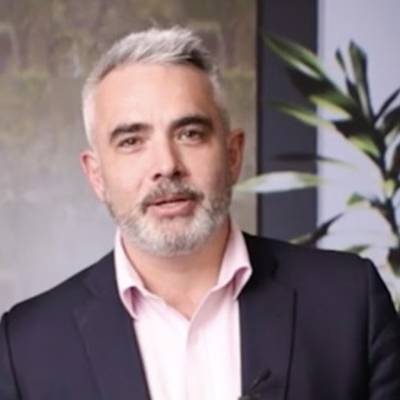
Alex Margarit, Sales AI Expert, SaaS Sales Leader, BMC, ServiceNow, Docusign — 25+ years in SaaS sales.