


Content: # Confidence Bands, Not Single Numbers: A New Forecast UI
The traditional forecast is a single rigid number. This creates a false sense of precision and sets leaders up for failure when deals slip.
This article explains why you must move from single numbers to confidence bands.
What We'll Cover
- The danger of single-number forecasting
- What are confidence bands?
- Calculating best case, commit, and most likely
- Communicating ranges to the Board
- How AI improves accuracy
Understanding the Approach
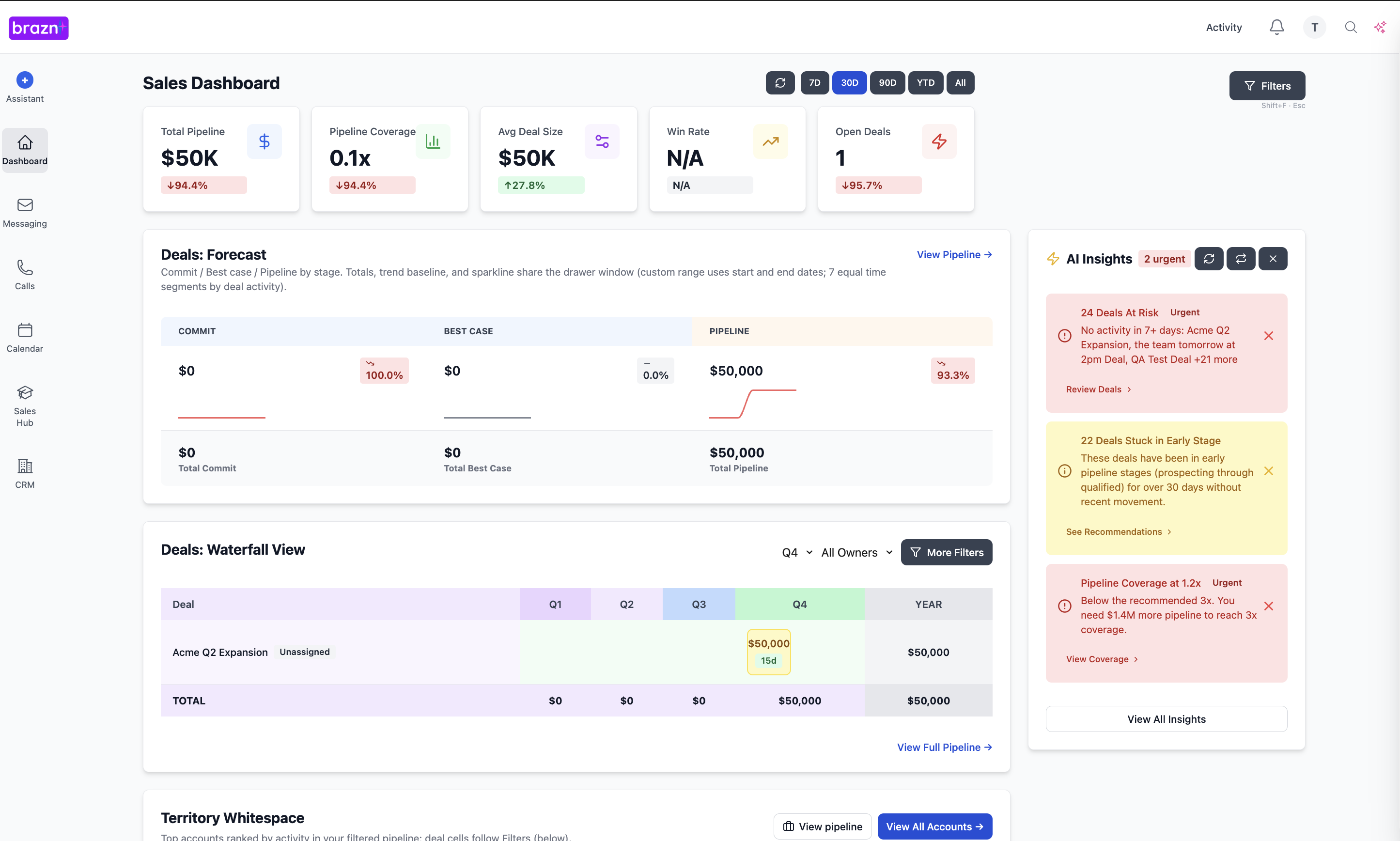
Forecasting with confidence bands means presenting a range of outcomes based on historical data and pipeline health.
Example: Instead of committing $5.2M, present a band with commit (90% probability), target (50%), and best case (10%).
Why This Matters
Confidence bands shift the conversation.
- Before: Leaders are judged on hitting an exact number. After: Leaders are judged on operating within expected ranges.
- Before: Reps are pressured to commit deals. After: Reps provide honest risk assessments.
- Before: The Board is surprised. After: The Board understands variability.
The Complete Guide
Step 1: Ditch the Spreadsheet
Objective: Use statistical modeling.
Actionable Advice: Use tools that apply historical win rates to pipeline.
Step 2: Define the Three Tiers
Objective: Standardize ranges.
Actionable Advice: Always report commit, target, and best case.
Step 3: Manage the Narrative
Objective: Educate the executive team.
Actionable Advice: Train the Board on interpreting ranges.
How to Implement This
RevOps builds the modeling. The CRO owns the narrative.
Next Steps
For your next forecast call, present a range, not a single number.
Confidence Bands, Not Single Numbers: A New Forecast UI
The traditional forecast is a single, rigid number: 'We will close $5.2M this quarter.' This creates a false sense of precision and sets the CRO up for failure when deals inevitably slip. Modern revenue leaders are shifting to a new forecasting UI based on statistical probabilities. This article explains why you must move from 'Single Numbers' to 'Confidence Bands' to build trust with your Board and executive team.
What We'll Cover
- The danger of single-number forecasting
- What are Confidence Bands?
- Calculating the Best Case, Commit, and Most Likely scenarios
- Communicating ranges to the Board
- How AI improves confidence band accuracy
Understanding the Approach
Forecasting with Confidence Bands means presenting a range of possible outcomes based on historical data and current pipeline health, rather than a single point prediction. Example: Instead of committing exactly $5.2M, the CRO presents a forecast band: 'Based on current pipeline and historical win rates, we have a 90% confidence of hitting $4.8M (Commit), a 50% confidence of hitting $5.2M (Target), and a 10% chance of hitting $5.8M (Best Case).'
Why This Matters
Using confidence bands changes the conversation from 'Did you hit the exact number?' to 'Are we operating within the expected parameters of our business model?'
- Before: The CRO is viewed as unreliable if they miss the exact number by 2%. After: The CRO is viewed as strategic and data-driven.
- Before: Reps are pressured to commit deals that aren't ready. After: Reps provide honest assessments of deal risk.
- Before: The Board is surprised by misses. After: The Board understands the inherent variability in the pipeline.
The Complete Guide
Step 1: Ditch the Spreadsheet
Objective: Use statistical modeling.
Actionable Advice: Stop adding up individual deal values. Use RevOps tools that apply historical win rates to the current pipeline to generate a probability curve.
Step 2: Define the Three Tiers
Objective: Standardize the ranges.
Actionable Advice: Always report three numbers: Commit (worst-case scenario, 90% probability), Target (most likely scenario, 50% probability), and Best Case (everything goes right, 10% probability).
Step 3: Manage the Narrative
Objective: Educate the executive team.
Actionable Advice: Train your CEO and Board to understand that landing anywhere within the Commit and Target band is a successful, predictable quarter.
How to Implement This
RevOps is the architect of the confidence bands, responsible for the statistical modeling. The CRO must own the narrative and educate the broader executive team on how to interpret the new forecast UI.
Next Steps
Stop playing a guessing game with your forecast. Embrace the reality of probability. For your next forecast call, refuse to give a single number; instead, present a well-reasoned Commit and Target range.
---
####
Book a demo to see how Brazn AI fits into your sales stack.

About the Author

Alex Margarit, Sales AI Expert, SaaS Sales Leader, BMC, ServiceNow, Docusign — 25+ years in SaaS sales.