

Content: # Choosing Deal Management for an AI-Native Sales Floor
The traditional approach to deal management involves a weekly pipeline review where managers interrogate reps about CRM stage gates. This is slow, subjective, and reactive. In an AI-native sales floor, deal management must evolve. This article explores how to choose and implement a modern deal management approach that leverages AI to proactively identify risks and guide strategy.
What We'll Cover
- The failure of traditional pipeline interrogations
- Defining AI-Native Deal Management
- Approach 1: The Signal-Driven Deal Board
- Approach 2: The Automated Deal Desk
- Shifting the manager's role from inspector to coach
Understanding the Approach
AI-Native Deal Management shifts the focus from 'What stage is this in?' to 'What is the data telling us about the probability of this closing?' It uses AI to analyze engagement signals, call transcripts, and historical win rates to provide an objective health score. Example: Instead of a rep simply stating a deal is 'Commit,' the AI-native system highlights that the deal lacks multi-threading and the champion hasn't opened an email in 10 days, prompting a strategic discussion on how to re-engage.
Why This Matters
Adopting an AI-native approach improves forecast accuracy and helps reps win more deals through proactive intervention.
- Before: Deal reviews are subjective and rely on rep memory. After: Deal reviews are objective and driven by data.
- Before: Risks are discovered too late to save the deal. After: Risks are flagged early, allowing for course correction.
- Before: Managers spend 1:1s updating CRM fields. After: Managers spend 1:1s strategizing on complex accounts.
The Complete Guide
Step 1: Implement a Signal-Driven Board
Objective: Visualize objective deal health.
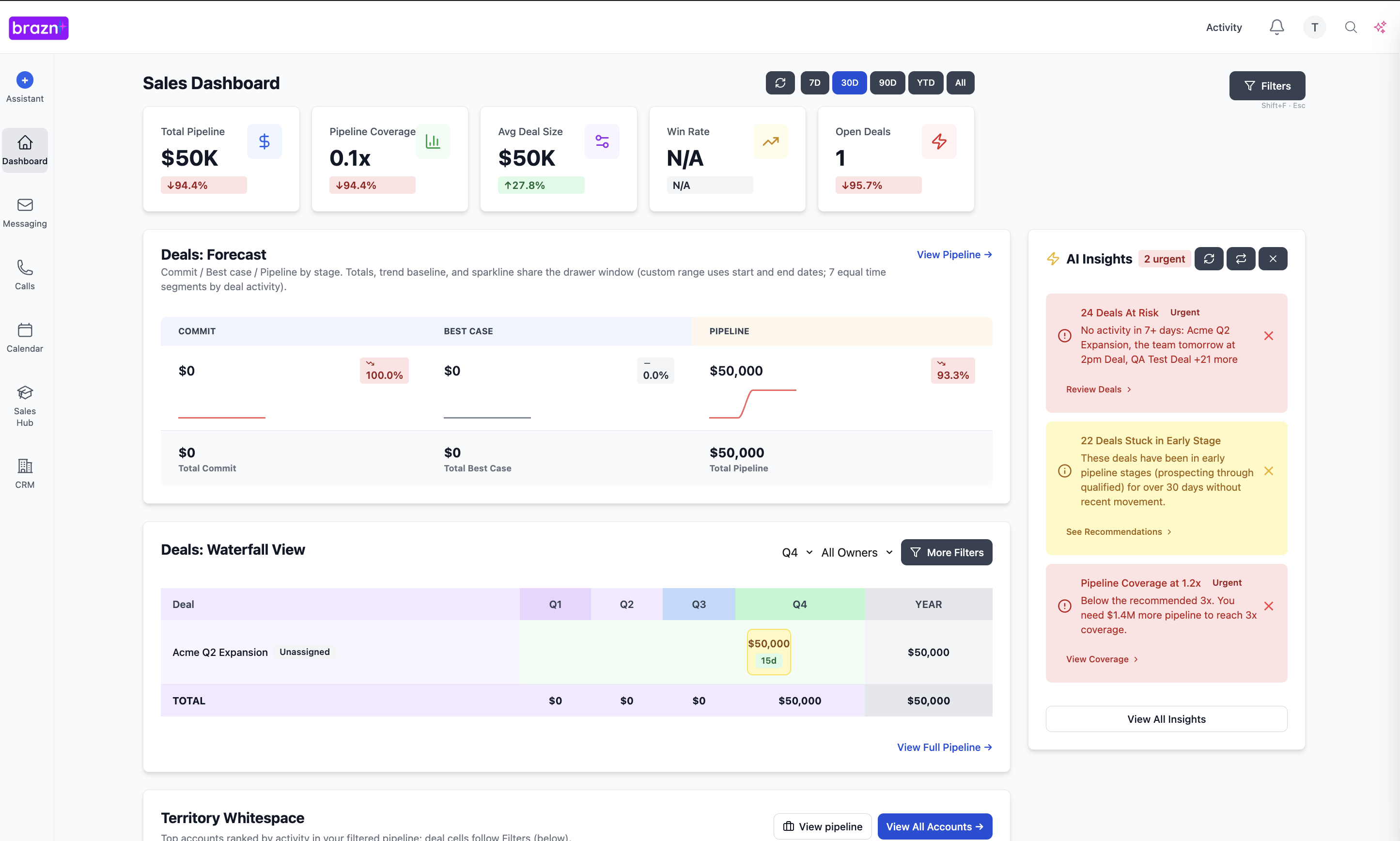
Actionable Advice: Move away from standard CRM list views. Use a platform that visualizes deals based on an AI-calculated health score, bringing at-risk deals to the top of the queue.
Step 2: Automate the Deal Desk
Objective: Speed up approvals and pricing.
Actionable Advice: Use AI to analyze past closed-won deals and automatically suggest the optimal pricing and discount structure for a new proposal, reducing friction in the negotiation stage.
Step 3: Redefine the 1:1 Cadence
Objective: Focus on strategy, not status.
Actionable Advice: Require reps to review the AI-generated risk factors before their 1:1. The meeting should focus entirely on 'How do we mitigate this specific risk?' rather than 'What's the status?'
How to Implement This
RevOps must implement the technology that calculates the health scores and visualizes the deal board. Sales Leadership must enforce the new review cadence, training managers to trust the AI's risk assessments and coach accordingly.
Next Steps
Stop interrogating your reps and start coaching them. AI provides the objective data you need to manage deals proactively. Look at your pipeline dashboard today: does it tell you what stage a deal is in, or does it tell you if the deal is actually healthy?
The traditional approach to deal management is a weekly pipeline review where managers interrogate reps about CRM stage gates. It’s slow, subjective, and reactive.
In an AI-native sales floor, deal management has to evolve. This article covers how to choose and implement a modern approach that uses AI to proactively identify risks and guide strategy.
What we’ll cover
- Why traditional pipeline interrogations fail
- What “AI-native deal management” actually means
- Approach 1: The signal-driven deal board
- Approach 2: The automated deal desk
- How the manager role shifts from inspector to coach
Understanding the approach
AI-native deal management shifts the question from:
- “What stage is this deal in?”
to:
- “What is the data telling us about the probability of this deal closing?”
It uses AI to analyze engagement signals, call transcripts, and historical win rates to generate an objective deal health score.
Example: Instead of a rep simply stating a deal is “Commit,” the system flags that:- The deal lacks multi-threading
- The champion hasn’t opened an email in 10 days
That prompts a strategy conversation about how to re-engage.
Why this matters
Adopting an AI-native approach improves forecast accuracy and helps reps win more deals through proactive intervention.
- Before: Deal reviews are subjective and rely on rep memory. After: Deal reviews are objective and driven by data.
- Before: Risks are discovered too late to save the deal. After: Risks are flagged early, allowing course correction.
- Before: Managers spend 1:1s updating CRM fields. After: Managers spend 1:1s strategizing on complex accounts.
The complete guide
Step 1: Implement a signal-driven board
Objective: Visualize objective deal health. Actionable advice: Move away from standard CRM list views. Use a platform that visualizes deals by an AI-calculated health score and brings at-risk deals to the top of the queue.Step 2: Automate the deal desk
Objective: Speed up approvals and pricing. Actionable advice: Use AI to analyze past closed-won deals and suggest an optimal pricing and discount structure for new proposals—reducing friction in negotiation.Step 3: Redefine the 1:1 cadence
Objective: Focus on strategy, not status. Actionable advice: Require reps to review AI-generated risk factors before their 1:1. The meeting should focus on “How do we mitigate this specific risk?” rather than “What’s the status?”How to implement this
- RevOps: Implements the health scoring and the deal board.
- Sales leadership: Enforces the new review cadence and trains managers to trust the system’s risk flags and coach accordingly.
Next steps
Stop interrogating your reps and start coaching them.
Look at your pipeline dashboard today:
- Does it tell you what stage a deal is in?
- Or does it tell you whether the deal is actually healthy?
####
Book a demo to see how Brazn AI fits into your sales stack.

About the Author

Alex Margarit, Sales AI Expert, SaaS Sales Leader, BMC, ServiceNow, Docusign — 25+ years in SaaS sales.