

Content: # Choosing Between a Sales OS and a Stack of Best-of-Breed Tools
As revenue teams look to modernize their tech stacks, a massive debate is raging: do you buy a single, all-in-one 'Sales OS' (Operating System) or do you wire together a stack of 'Best-of-Breed' point solutions? There is no universally right answer, but making the wrong choice for your specific organization will lead to technical debt and low adoption. This article provides a framework for choosing the right path.
What We'll Cover
- The Great Tech Stack Debate
- The case for the Sales OS (All-in-One)
- The case for Best-of-Breed (Point Solutions)
- The 'Data Gravity' consideration
- How to make the decision for your team
Understanding the Approach
The choice between a Sales OS and a Best-of-Breed stack comes down to the trade-off between seamless integration and specialized functionality. A Sales OS (e.g., HubSpot) offers a unified data model and a single UI, but might lack deep, specialized features. A Best-of-Breed stack (e.g., Salesforce + Outreach + Gong + 6sense) offers the best tool for every specific job, but requires significant RevOps effort to integrate and maintain the data flow.
Why This Matters
Choosing the right architecture ensures your tech stack accelerates your GTM motion rather than slowing it down with integration headaches or missing features.
- Before: Teams struggle with siloed data across 10 different tools. After: A Sales OS provides a single source of truth.
- Before: Teams outgrow the basic features of an all-in-one platform. After: A Best-of-Breed stack provides the advanced capabilities needed to scale.
- Before: RevOps spends 80% of their time fixing API connections. After: The architecture matches the RevOps team's capacity to manage it.
The Complete Guide
Scenario 1: Choose the Sales OS When...
Objective: Prioritize simplicity and unified data.
Actionable Advice: Opt for an all-in-one platform if you have a lean RevOps team, a relatively straightforward sales motion, and value a unified user experience over hyper-specialized features.
Scenario 2: Choose Best-of-Breed When...
Objective: Prioritize advanced capabilities.
Actionable Advice: Build a custom stack if you have a complex enterprise motion, a dedicated RevOps engineering team, and require the absolute best functionality in specific areas (like intent data or conversational intelligence).
The Hybrid Approach: The 'Hub and Spoke'
Objective: Balance power and integration.
Actionable Advice: Use a powerful CRM as the central 'Hub' (the OS) and carefully select a few Best-of-Breed 'Spokes' only for critical capabilities where the Hub falls short.
How to Implement This
The CRO and VP of RevOps must make this architectural decision together. The CRO defines the business requirements (what the tools need to do), and RevOps determines the technical feasibility (how to build and maintain it).
Next Steps
Don't let a vendor dictate your architecture. The right choice depends entirely on your team's size, complexity, and RevOps capacity. Evaluate your current stack: are you suffering from 'Franken-stack' integration issues, or are you constrained by the limitations of an all-in-one platform?
As revenue teams modernize their tech stacks, a debate keeps coming up:
- Do you buy a single, all-in-one Sales OS (operating system)?
- Or do you wire together a best-of-breed stack of point solutions?
There’s no universally right answer. But making the wrong choice for your organization leads to technical debt and low adoption.
This article provides a framework to help you choose.
What we’ll cover
- The great tech stack debate
- The case for a Sales OS (all-in-one)
- The case for best-of-breed (point solutions)
- The “data gravity” consideration
- How to decide for your team
Understanding the trade-off
The choice comes down to a classic trade-off:
- Integration + simplicity (Sales OS)
- Specialized depth (best-of-breed)
Sales OS (all-in-one)
A Sales OS (e.g., HubSpot) offers a unified data model and a single UI, but may lack deep, specialized features in certain areas.
Best-of-breed stack
A best-of-breed stack (e.g., Salesforce + Outreach + Gong + 6sense) gives you the strongest tool for each job, but requires significant RevOps effort to integrate and maintain clean data flow.
Why this matters
Choosing the right architecture ensures your stack accelerates GTM execution instead of slowing it down with integration overhead or missing features.
- Before: Siloed data across 10 tools. After: A Sales OS provides a single source of truth.
- Before: You outgrow basic all-in-one features. After: Best-of-breed provides the advanced capabilities you need.
- Before: RevOps spends 80% of time fixing integrations. After: The architecture matches RevOps capacity.
The complete guide
Scenario 1: Choose a Sales OS when…
Objective: Prioritize simplicity and unified data. Good fit if:- You have a lean RevOps team
- Your sales motion is relatively straightforward
- You value a unified experience over hyper-specialized features
Scenario 2: Choose best-of-breed when…
Objective: Prioritize advanced capabilities. Good fit if:- You have a complex enterprise motion
- You have dedicated RevOps engineering capacity
- You need best-in-class functionality in specific areas (e.g., intent data, conversational intelligence)
The hybrid approach: “hub and spoke”
Objective: Balance power and integration. How it works: Use a powerful CRM as the central hub (the OS) and add a small number of best-of-breed spokes only where the hub falls short.How to implement this
- CRO: Defines business requirements (what tools must enable).
- RevOps: Determines feasibility and the architecture (how to build/maintain it).
Next steps
Evaluate your current stack and answer:
- Are you suffering from Franken-stack integration issues?
- Or are you constrained by the limitations of an all-in-one platform?
####
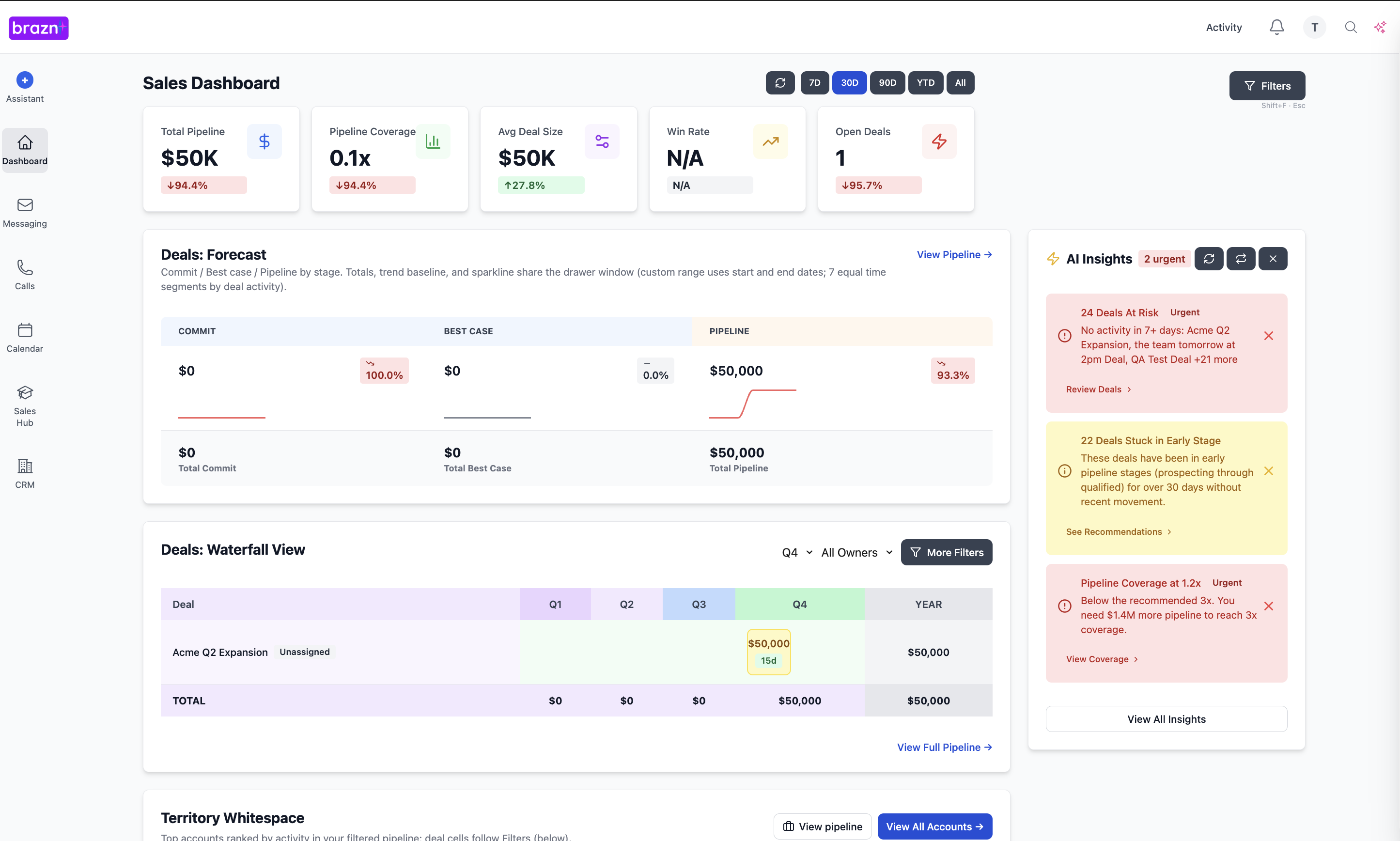
Book a demo to see how Brazn AI fits into your sales stack.

About the Author

Alex Margarit, Sales AI Expert, SaaS Sales Leader, BMC, ServiceNow, Docusign — 25+ years in SaaS sales.