
Pipedrive vs HubSpot: Which CRM for SaaS Sales?
Pipedrive and HubSpot are two of the most common CRMs for growth-stage SaaS. The right choice depends on sales motion, team size, marketing alignment needs, and RevOps capacity.
The Core Difference
Pipedrive is pipeline-first: fast, visual, lightweight.
HubSpot is customer-record-first: broader marketing/sales/service context with deeper automation and reporting.
Comparison
| Dimension | Pipedrive | HubSpot Sales Hub |
|---|---|---|
| Ease of use | Excellent | Very good |
| Pipeline visibility | Excellent | Very good |
| Customisation | Moderate | Strong |
| Marketing integration | Limited | Excellent (native) |
| Reporting | Good | Excellent |
| Sequences/cadences | Basic | Native in Pro/Ent |
| Validation rules | No | Yes (Pro/Ent) |
| Admin complexity | Low | Moderate (scales with complexity) |
When Pipedrive Is the Better Choice
Best fit when:
- 1–20 reps
- ACV mostly < $50K
- cycles < 60 days
- limited RevOps resource
- marketing alignment is not a major requirement
When HubSpot Is the Better Choice
Best fit when:
- 10–100 reps
- ACV ~$20K–$200K
- cycles 30–120 days
- marketing + sales alignment matters
- you need workflows, validation rules, and strong reporting
The Migration Question
The common path is Pipedrive → HubSpot as complexity grows. Migration is manageable (typically 4–8 weeks), with the main cost being rep retraining and temporary visibility disruption.
How Brazn Works with Both
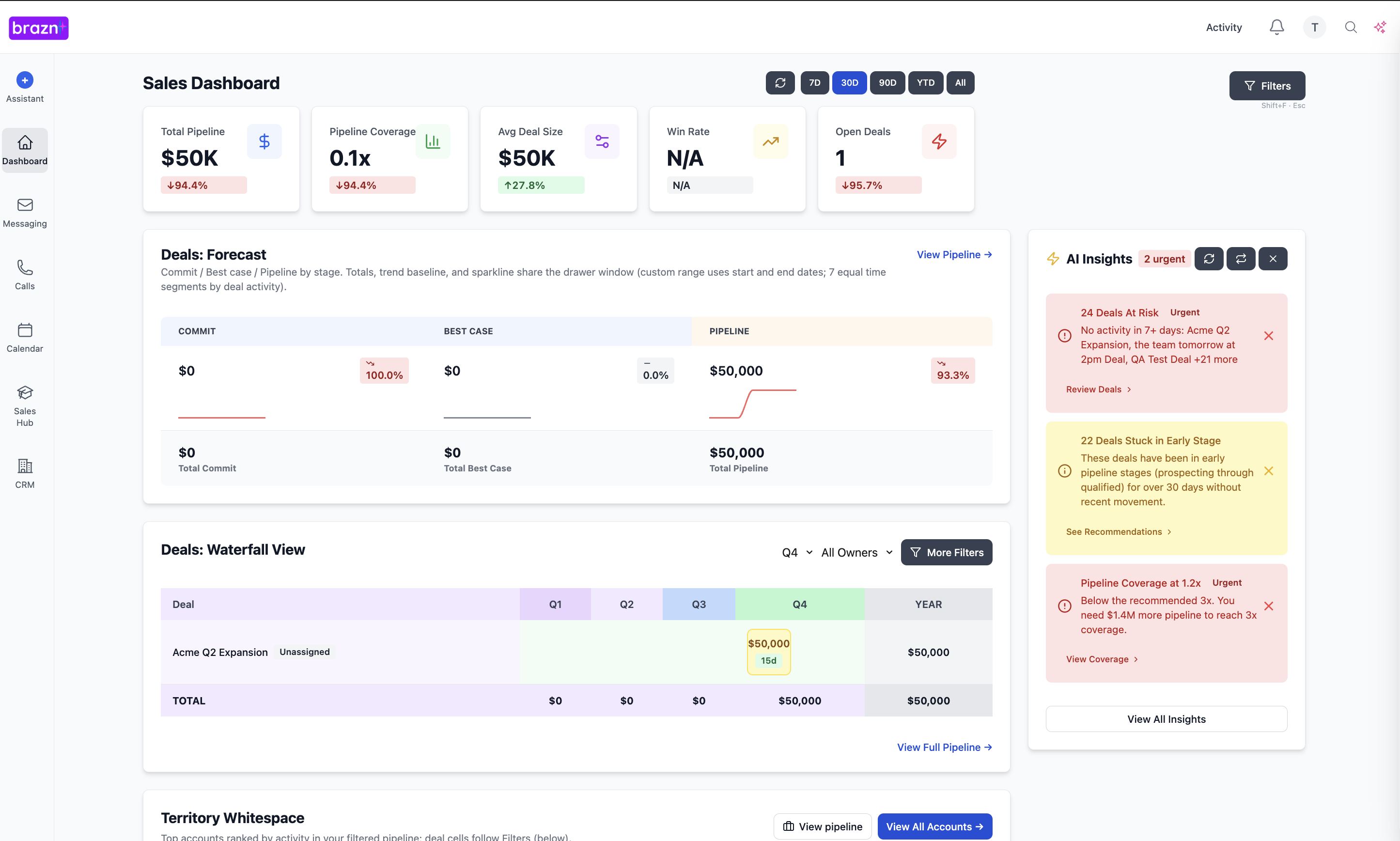
Brazn integrates with both Pipedrive and HubSpot, adding call intelligence, MEDDPICC auto-population, deal health scoring, and pre-call briefs — regardless of CRM choice.
See Brazn in your sales stack
Map your current tools and see how Brazn can connect the work between them.