
Thumbnail image: AI%20Sales%20Tools%20for%20SaaS%20HealthTech/Brazn_AI_HealthTech_Sales_Tools.png
AI Sales Tools for SaaS HealthTech
HealthTech SaaS is one of the most high-stakes and heavily regulated categories in enterprise software. In the US, the HIPAA Privacy and Security Rules govern how vendors handle protected health information — making a signed Business Associate Agreement (BAA) a non-negotiable deal step. Gong's research on complex multi-stakeholder deals shows that deals with 6+ stakeholders take on average 30% longer to close and have a 20% higher risk of stalling at the final approval stage. Selling into healthcare means navigating clinical stakeholders, IT and security teams, compliance officers, and C-suite executives — often simultaneously — with deal cycles that routinely run 9–18 months.
The compliance burden is real: HIPAA in the US, GDPR in Europe, and a matrix of regional health data regulations create genuine gatekeepers in every enterprise deal. And the consequences of poor implementation aren't just operational — they can be clinical.
AI sales tools don't change those fundamental realities. But they give HealthTech sales teams the intelligence infrastructure to navigate them more effectively.
The HealthTech Buying Committee
Clinical stakeholdersClinicians, medical directors, and department heads are often the primary users and champions for clinical HealthTech tools. They evaluate on clinical workflow fit, patient outcomes impact, and usability. They're often not commercially sophisticated — and they're also often the hardest people to get time with.
IT and security teamsHealthTech IT evaluations are among the most rigorous in enterprise SaaS. HIPAA compliance, data residency, audit logging, access controls, BAA (Business Associate Agreement) requirements, and EHR integration complexity all need to be addressed — often before a commercial conversation begins.
Compliance and legalHealthcare compliance teams review vendor contracts and data handling practices carefully. The BAA process in the US and equivalent frameworks in other jurisdictions are non-negotiable deal steps. Getting these started early is critical path.
C-suite and FinanceCMOs, CIOs, and CFOs ultimately own the budget decision. They buy on outcomes: operational efficiency, cost reduction, revenue impact, or risk mitigation. Connecting product capabilities to those C-suite outcomes is the AE's most important skill.
How AI Sales Tools Help HealthTech AEs
1. Compliance preparation before every callHealthTech reps need to know the applicable compliance framework for each prospect before the first call. AI can brief reps on relevant requirements — HIPAA, GDPR, HITECH, state-level regulations — and the documentation typically needed at each deal stage. Reps who show up to IT and compliance meetings prepared save weeks in evaluation cycles.
2. Clinical persona researchClinical stakeholders have distinct priorities that aren't well-served by generic SaaS discovery briefs. AI tools that can generate persona briefs for CMOs, clinical informatics teams, or department-level medical directors — including their typical pain points and the outcomes they measure — help reps have more credible first conversations.
3. Multi-stakeholder deal trackingHealthTech deals frequently involve 6–10 stakeholders across clinical, IT, compliance, and finance. AI tools maintain a live stakeholder map — tracking engagement frequency, flagging missing personas, and identifying when the Economic Buyer has gone quiet — across a cycle that might span 12–18 months.
4. EHR and integration stack researchA hospital or health system's EHR landscape (Epic, Cerner, Meditech, Allscripts) is foundational to any HealthTech evaluation. AI tools that surface integration context from job postings, tech stack data, and public procurement records give AEs the context they need to frame integration conversations correctly from the start.
5. BAA and paper process trackingThe paper process in HealthTech is among the most complex in enterprise SaaS. BAA negotiation, security questionnaire completion, DPA review, procurement approval, and budget committee sign-off can each add weeks to a timeline. AI tools that map the paper process in the CRM and flag overdue steps help AEs proactively manage what is often the most common source of deal slippage.
6. Outcome-based ROI modelsHealthTech buyers respond to outcomes: reduced clinical admin burden, improved care coordination, faster billing cycles, reduced readmission rates. AI can help reps translate feature-level conversations into an outcome framework specific to the clinical or operational context of the prospect.
The Pattern to Watch For
According to Salesforce's State of Sales report, only 46% of reps hit quota — and in high-compliance verticals like HealthTech the number is lower still. HealthTech deals most commonly stall in one of two places: the IT/security review (where a poorly prepared rep gets stuck in a security questionnaire loop) or the budget committee approval (where the champion hasn't adequately briefed the C-suite). AI deal scoring that flags both missing IT engagement and absent C-suite contact early gives managers time to support before the stall becomes terminal.
How Brazn AI Serves HealthTech Sales Teams
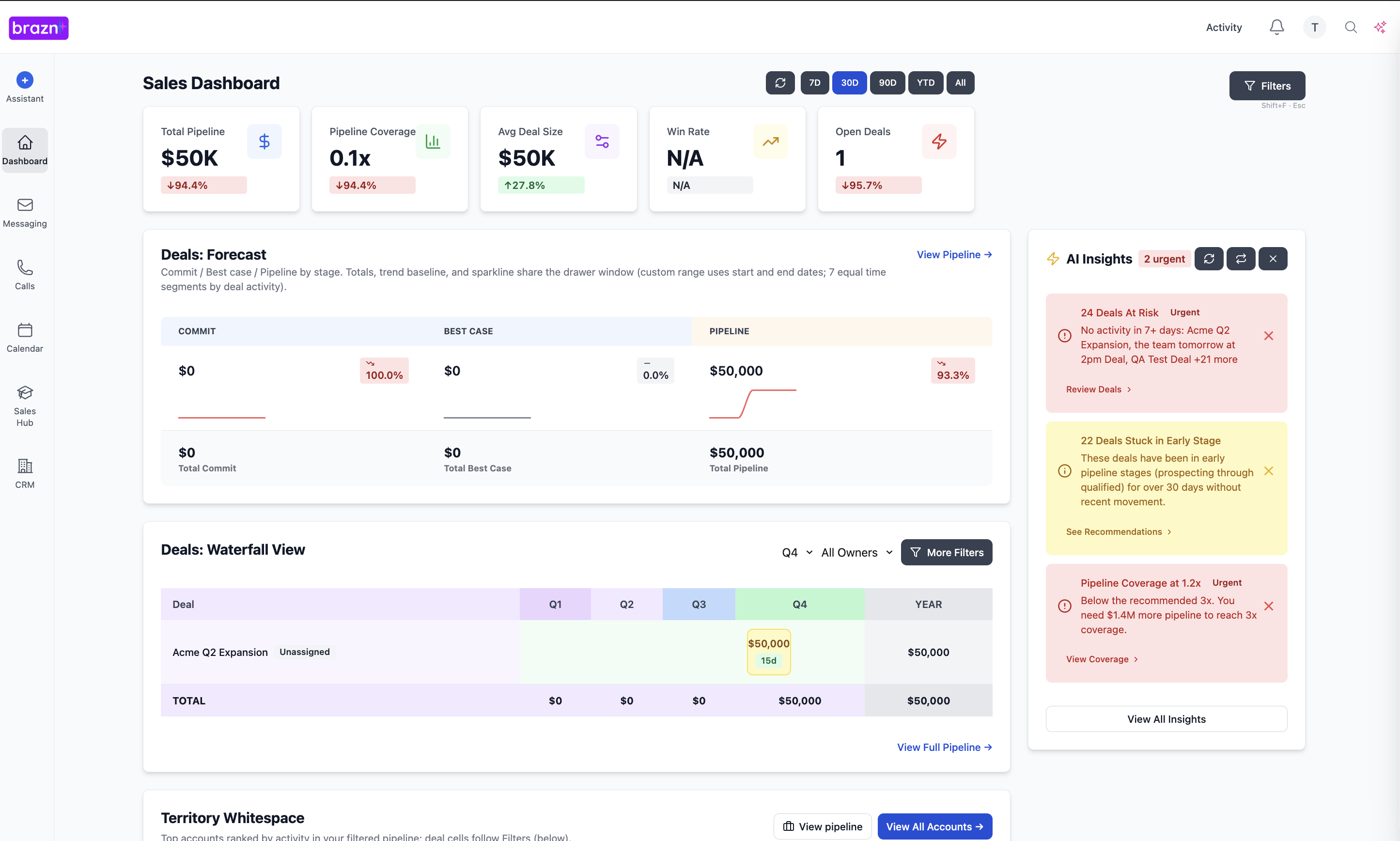
Brazn AI's stakeholder gap detection, paper process tracking, and MEDDPICC-aware deal intelligence give HealthTech AEs and managers the infrastructure to manage long, multi-stakeholder deals without losing track of what's missing, what's stalled, and where to focus this week.
####
Book a demo to see how Brazn AI fits into your sales stack.

About the Author

Alex Margarit, Sales AI Expert, SaaS Sales Leader, BMC, ServiceNow, Docusign — 25+ years in SaaS sales.