A 5-Step Playbook to Manage AI Sales Assistants from Experiment to Production
The hype around AI sales assistants is deafening, leading many revenue leaders to rush into purchasing the latest tools. However, the reality often falls short of the promise. Many teams find themselves stuck in "pilot purgatory," where a handful of reps use the AI for niche tasks, but it never scales to become a core part of the Go-to-Market motion. The problem isn't the technology; it's the lack of a structured deployment strategy.
Treating an AI sales assistant like just another software rollout is a mistake. AI tools require a different approach because they actively change how work gets done, requiring new habits and continuous refinement. Without a clear playbook for moving from initial testing to full-scale production, your investment will likely result in low adoption and unrealized ROI.
This article provides a 5-step playbook for successfully managing AI sales assistants. We will guide you through the process of scoping the initial experiment, defining success metrics, training your team, and ultimately embedding the AI into your daily revenue operations to drive measurable pipeline impact.
What We'll Cover
In this article, we will cover:
- Why traditional software deployment methods fail for AI tools
- Step 1: Defining the scope and success criteria of your pilot
- Step 2: Selecting the right "champion" reps for the experiment
- Step 3: Iterating on prompts and workflows based on early feedback
- Step 4: Scaling the rollout and updating your sales playbook
- Step 5: Establishing ongoing governance and optimization
Understanding the Approach
Managing an AI sales assistant from experiment to production means transitioning a tool from a controlled, limited test environment into a fully integrated, widely adopted component of your RevOps architecture. In B2B SaaS, this involves moving beyond novelty use cases (like writing a funny email) to operationalizing AI for core revenue tasks, such as pipeline generation, deal risk analysis, and automated CRM hygiene.
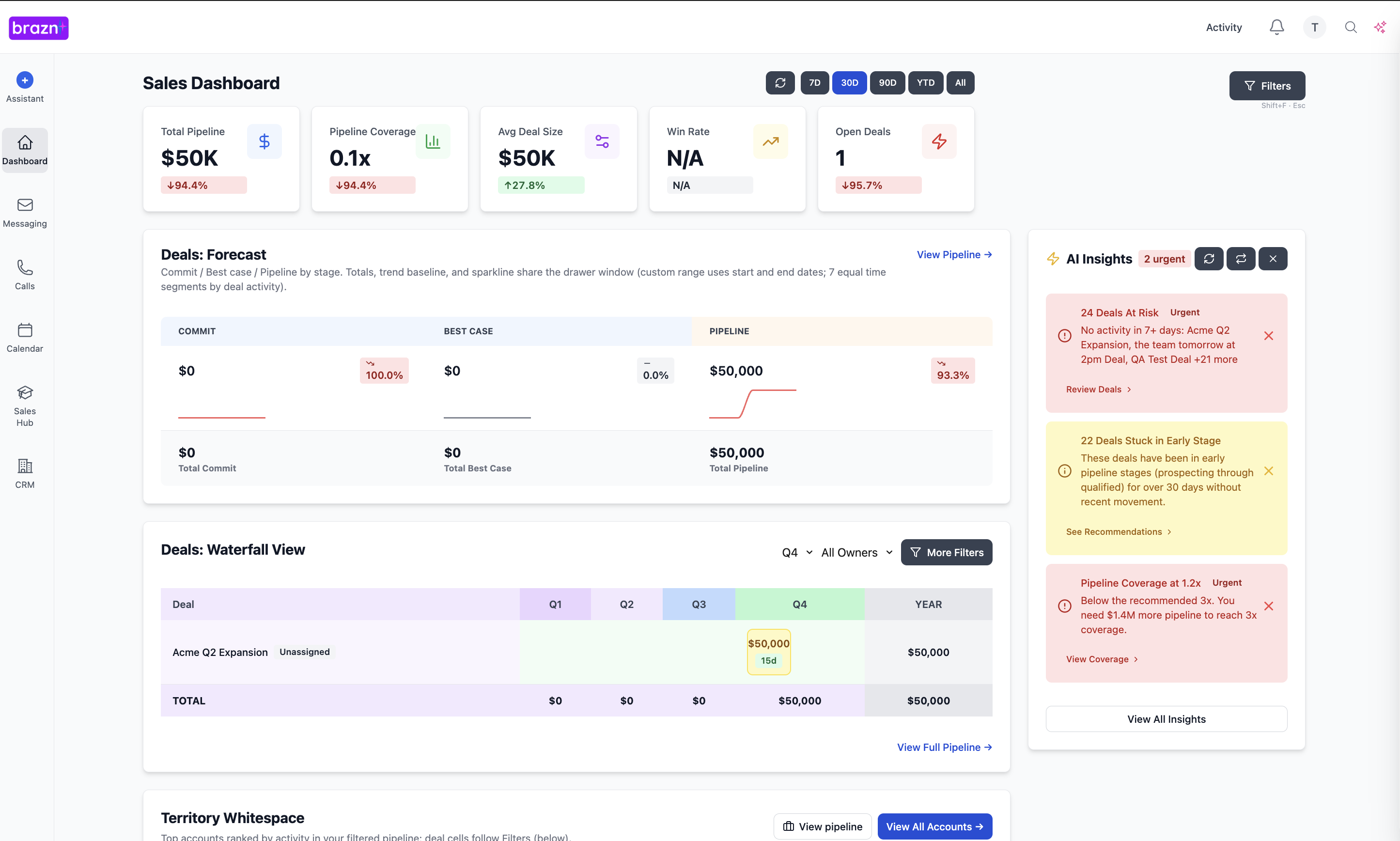
For example, an experiment might involve three Account Executives using Brazn to generate pre-call research briefs for a month. Moving to production means RevOps has integrated Brazn with Salesforce, and it now automatically pushes a standardized, AI-generated brief into a Slack channel 15 minutes before every scheduled Discovery Call for the entire sales floor.
Why This Matters
A structured playbook for AI deployment is essential for RevOps and Sales leaders to ensure they realize the promised efficiency and revenue gains from their investment.
- Before: AI tools are purchased without a clear use case, leading to spotty adoption and wasted budget. After: A targeted pilot proves the value of the tool against specific metrics before a wider rollout.
- Before: Reps are left to figure out how to use the AI on their own, resulting in inconsistent messaging and frustration. After: Enablement provides clear, tested prompts and integrates the AI into existing sales workflows.
- Before: The AI rollout is considered "done" after the initial training session. After: RevOps establishes ongoing governance to continuously refine prompts and adapt the AI to changing market conditions.
The Complete Guide
Step 1: Define the Scope and Success Criteria
Objective: Establish clear, measurable goals for the initial AI pilot.
Advice: Choose one specific problem to solve first, such as reducing pre-call research time or increasing cold email reply rates. Define what success looks like (e.g., "Reduce research time by 50%").
Best Practices: Keep the scope narrow. Do not try to boil the ocean in the first 30 days.
Step 2: Select the Right Champions
Objective: Test the AI with reps who are tech-savvy and willing to provide constructive feedback.
Advice: Choose a mix of high-performers and reps who are open to new processes. Avoid forcing the tool on skeptics during the initial pilot phase.
Best Practices: Create a dedicated Slack channel for the pilot group to share successes, failures, and prompt ideas.
Step 3: Iterate on Prompts and Workflows
Objective: Refine how the AI is used based on real-world sales interactions.
Advice: Treat the first set of prompts as a draft. Review the AI's output weekly with the pilot group and adjust the instructions to improve relevance and tone.
Best Practices: Document the "winning" prompts that generate the best results and use them to build your standard playbook.
Step 4: Scale the Rollout and Update Playbooks
Objective: Deploy the AI to the wider team with proven, standardized processes.
Advice: Integrate the successful AI workflows into your official sales playbook. Train the rest of the team using the specific examples and prompts developed during the pilot.
Best Practices: Have your pilot champions lead the training sessions to build peer credibility.
Step 5: Establish Ongoing Governance
Objective: Ensure the AI continues to deliver value and adapts to new GTM strategies.
Advice: Assign an "AI owner" within RevOps or Enablement to regularly review usage data, update prompts based on new product messaging, and ensure CRM data hygiene.
Best Practices: Treat your AI assistant like a new employee that requires continuous coaching and feedback.
How to Implement This
Operationalizing this playbook requires tight coordination between RevOps, Sales Leadership, and Enablement. RevOps should own the technical integration, ensuring the AI has access to clean CRM data. Enablement is responsible for translating the successful pilot workflows into training materials and standardized prompts. Sales Managers must drive accountability by reviewing AI usage during 1:1s and ensuring reps are leveraging the tool to improve their performance, not just cut corners.
Next Steps
Moving an AI sales assistant from a shiny new toy to a core piece of your production tech stack requires discipline and a structured approach. By following this 5-step playbook, you can avoid pilot purgatory and ensure your AI investment actually drives revenue.
Start small this week: Identify one specific, time-consuming task (like drafting follow-up emails) and define how you would measure success if an AI tool could automate it. When you're ready to run a structured, impactful pilot, explore how Brazn can integrate into your workflows.
####
Book a demo to see how Brazn AI fits into your sales stack.

About the Author
Alex Margarit, Sales AI Expert, SaaS Sales Leader, BMC, ServiceNow, Docusign — 25+ years in SaaS sales.